











Camera Gimbals and Stabilizers: A Buyer’s Guide for Smooth Cinematic Video
Shaky footage instantly looks amateur, while smooth, stable shots feel cinematic, professional, and expensive. That stability does not come from luck; it comes from the right support gear. Stabilisation is one of the most overlooked upgrades a creator can make, yet it has an immediate, visible impact on the quality of your videos. At Foto Crown, our range of camera stabilizers covers everything from pocket gimbals to full studio cranes. This guide explains the main types of stabilisation, how to match a stabiliser to your camera, and which products are worth your money.
Types of Camera Stabilizers
There is no single “best” stabiliser, only the right tool for the shot you want. Each type solves a different problem, and many creators own more than one.
- Handheld gimbals: motorised stabilisers that keep your camera perfectly level while you walk, run, or move.
- Tripods: rock-steady support for sharp stills, interviews, long exposures, and locked-off shots.
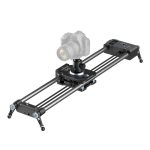
- Camera sliders: smooth horizontal motion that adds production value to product and b-roll shots.
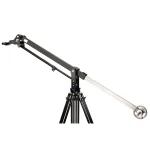
- Jib cranes: sweeping vertical and arcing moves for dramatic, cinematic reveals.
- Monopods: lightweight, quick support ideal for run-and-gun, sports, and events.
How a Gimbal Actually Works
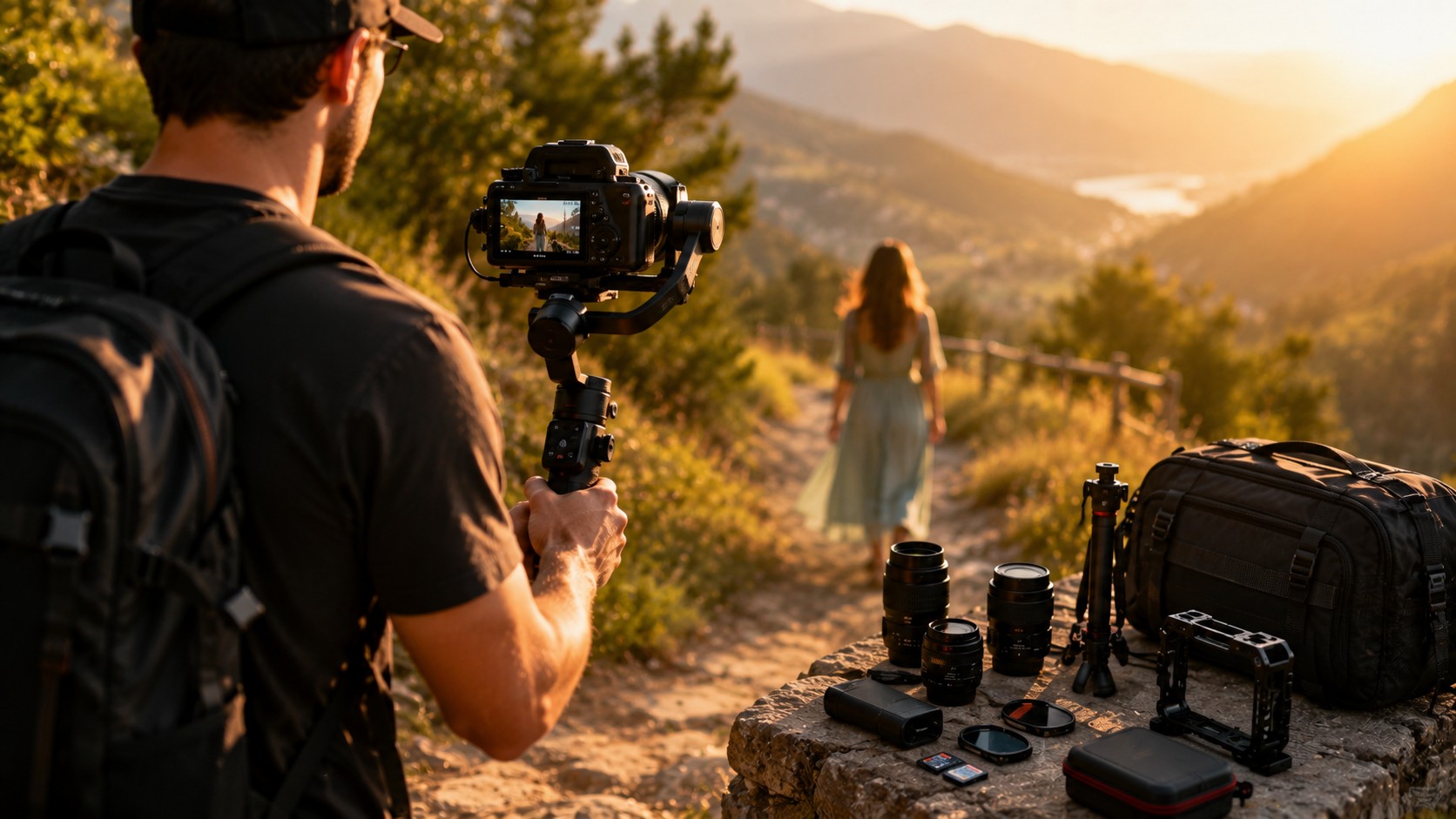
A modern 3-axis gimbal uses brushless motors and sensors to counteract your movements on three axes: pan, tilt, and roll. As you walk or turn, the motors instantly compensate, keeping your camera steady and your horizon level. The result is the floating, smooth look you see in professional films. Understanding this helps you appreciate why correctly balancing your camera on the gimbal, before you switch the motors on, is so important for performance and battery life. Explore our full handheld stabilizers range to see the options.
Zhiyun Smooth-Q4 Smartphone Gimbal
If you shoot on your phone, the Zhiyun Smooth-Q4 is a fantastic and affordable entry point. This compact 3-axis gimbal includes a built-in extension rod for higher and group shots, supports both landscape and portrait orientation for social media, offers long battery life, and packs intelligent shooting modes like tracking and time-lapse. It is perfect for vloggers, TikTok and Instagram creators, and anyone starting their stabilisation journey. Browse more handheld stabilizers for larger cameras as you upgrade.
DJI Osmo Pocket 4
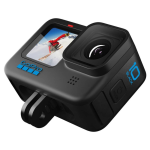
The DJI Osmo Pocket 4 is a brilliant all-in-one solution that combines a 1-inch sensor camera with built-in 3-axis mechanical stabilisation in a body small enough for your pocket. It captures stunning 4K footage with intelligent subject tracking, making it ideal for travel, vlogging, and everyday creativity without carrying a separate camera and gimbal. The Creator Combo adds extra accessories like a wide-angle lens and wireless mic for serious content creators. It also fits neatly within our action cameras range.
Matching the Stabilizer to Your Camera
The most common mistake buyers make is ignoring the payload rating, which is the maximum camera-and-lens weight a gimbal can balance. A stabiliser that is too small will struggle, drain its battery quickly, and may fail to hold your setup level. Always check that your mirrorless camera and lens combination falls comfortably within the gimbal’s rated payload. For larger, more complex rigs, a camera cage or rig lets you securely mount a monitor, microphone, and other accessories without throwing off the balance.
Stabilizers for Studio and Cinema Work
Professional sets call for heavier-duty tools. A steadicam body-mounted rig lets an operator walk, run, and climb stairs while keeping the shot impossibly smooth. A camera dolly glides along the floor or a track for perfectly controlled push-ins and tracking shots, and a jib crane creates the dramatic rising and sweeping moves seen in films and music videos. Combined with quality cine lenses, these tools produce truly cinematic results.
Techniques for Smoother Footage
Gear is only half the story. To get the best from any stabiliser, move slowly and deliberately, bend your knees slightly and walk heel-to-toe to absorb bumps, and lead with your body rather than your arms. Practise common moves like the reveal, the orbit, and the low-mode pass. Even a budget gimbal in skilled hands will outperform an expensive one used carelessly.
Wrap-Up
From the pocket-sized Zhiyun Smooth-Q4 and all-in-one DJI Osmo Pocket 4 to professional sliders, steadicams, and jib cranes, the right stabiliser transforms ordinary footage into cinematic video. Match the tool to your camera and your shot, practise your technique, and your videos will instantly look more polished. Explore the full range of camera stabilizers at Foto Crown.
For smartphones, the Zhiyun Smooth-Q4 is an affordable, beginner-friendly choice. Explore more in our handheld stabilizers collection.
In-body stabilisation reduces small shakes, but a gimbal is still needed for smooth walking and moving shots.
A camera slider creates smooth horizontal motion, adding a professional, cinematic feel to video and b-roll.
Yes, from gimbals to steadicams and jib cranes. Browse our full camera stabilizers range or contact us.