











How to Choose the Right Tripod for Photography and Video
A tripod is one of the most underrated pieces of gear a photographer or videographer can own. It is the difference between a soft, shaky shot and a crisp, professional one. Yet with so many options, choosing the right tripod can be confusing. This guide breaks down everything that matters, so you buy once and buy well. Explore our tripod range at Foto Crown as you read.
Why a Tripod Matters
A tripod eliminates camera shake, which unlocks whole categories of photography: sharp low-light and night shots, long exposures of water and light trails, crisp landscapes, precise product photography, and rock-steady video. It also slows you down in a good way, encouraging more careful, deliberate composition. For any serious shooter, a good tripod quickly becomes indispensable.
Types of Tripods and Supports
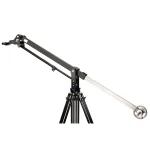
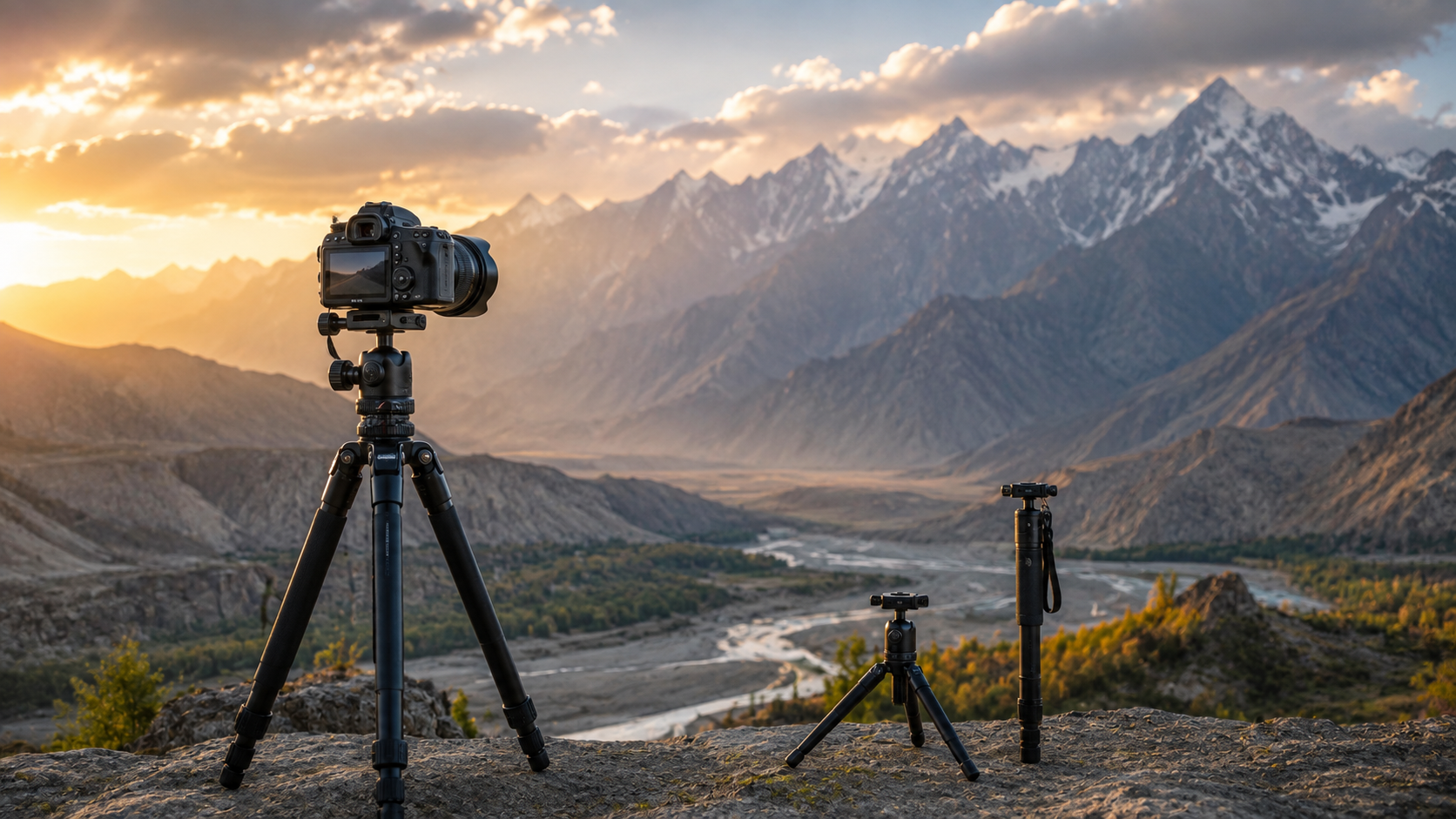
There is a support for every situation. A full-size tripod offers maximum stability and height, a travel tripod folds compact for portability, and a monopod provides quick, single-leg support for sports and events. For moving video shots you will also want a handheld gimbal, and for rigged setups a camera rig helps mount everything together. Browse the full stabilizer range.
Material: Aluminium vs Carbon Fibre
Most tripods are made from aluminium or carbon fibre. Aluminium is affordable, strong, and a great choice for studio and general use. Carbon fibre is lighter and better at dampening vibration, which makes it ideal for travel and outdoor work, though it costs more. Consider how far you will carry your tripod and whether weight or budget matters more to you.
Understanding Tripod Heads
The head is what your camera actually attaches to, and it matters as much as the legs. A ball head is compact and fast for photography, a pan-tilt head offers precise control, and a fluid head gives the smooth, gliding pans and tilts that video demands. Choosing the right head for your work is key, so think about whether you shoot mainly stills, video, or both before you buy a tripod.
Payload and Height
Two numbers decide whether a tripod suits your gear. Payload is the maximum weight it can safely hold, so make sure it comfortably supports your heaviest camera and lens combination with room to spare. Height matters too: look for a tripod that reaches your eye level without needing the centre column fully raised, which is where stability is weakest.
Tripods for Different Types of Work
For landscapes, prioritise stability and a comfortable height. For video, a fluid head is essential for smooth motion. For product and studio work, look for a sturdy tripod with a centre column that can position the camera precisely. For travel, a lightweight, compact carbon tripod wins. Match the tripod to your main subject and it will serve you for years.
Pairing With Other Support Gear
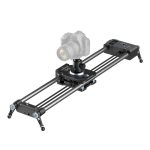
A tripod is part of a wider support system. Add a monopod for fast events, a slider for smooth motion shots, or a gimbal for walking video. For larger cinema rigs, a camera rig ties your monitor, microphone, and accessories together. Explore all options in our camera stabilizers range.
Wrap-Up
The right tripod is a long-term investment that improves your images for years. Match the material, head, payload, and height to the way you shoot, and do not compromise on stability to save a little weight or money. Explore our full tripod and stabilizer ranges at Foto Crown to find your perfect match.
Focus on payload, height, material, and head type. Browse our tripod range to compare options.
Aluminium is affordable and sturdy; carbon fibre is lighter and better for travel. Both are available in our tripod collection.
A fluid head gives smooth pans and tilts for video. For stills, a ball head is fast and compact. See our tripods.
A monopod gives quick, lightweight single-leg support, ideal for sports, events, and heavy lenses.
Yes. Explore our tripod and camera stabilizers ranges, or contact us for help choosing.